
Welcome to the U15 AAA KJR Team Site
*SITE WORKS BEST ON LAPTOP OR COMPUTER*
This is the home of our program’s development system — built for players who want to separate themselves. Every resource here is designed to raise hockey IQ, sharpen execution, and build complete players on and off the ice.
🔹 What You’ll Find
Training & Development Aids – On-ice drills, off-ice workouts, and skill progression frameworks.
Player Development Aids – Tools, PDFs, and breakdowns to track growth and habits.
Game Footage – Full game film, clips, and teaching moments linked through Google Drive.
Systems & Strategies – Our playbook, structure, and team identity in action.
Goalie Corner – Dedicated development resources, mental prep, and positional study for goalies.
All sections link directly to our team’s Google Drive library, giving players and coaches full access anytime.

-
![]()
Player Portal
Full access to the teams google drive. All other folders are linked and shared. (do not share outside of our team)
-
![]()
Training & Development
Training Tips, Workouts and at home drills. Along with videos too watch
-
![]()
Player Development (Private)
Only access your individule folder (we can see who opens what)
-
![]()
Systems & Strategys
Game time systems. Practice plans, PP, PK and more
-
![]()
Game Film
Full games and important clips. Livebarn videos and links. Along with huddle breakdowns (Once we can figure it out)
-
![]()
Goalie Corner
Goalie corner will be a whole different player portal with access to videos and training aids. (Brixton and Travis)
-
![]()
Schedule & Team info
This is a direct link to our team schedule
Intensity | Net Front Presence | Shoot!
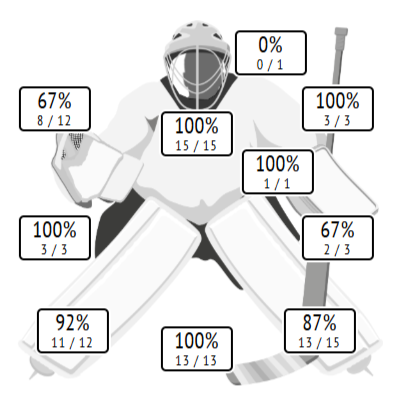
Goalie Szn Stats — Forbes
Games Played: 3
Goals Against: 7
Average Goals Against per Game: 2.3
PK Goals Against: 0.33
Avg SPG: 28
Save Percentage: 92%
Scoring Area Saves: 13
Scoring Area Save Percentage: 85%
Brilliant Saves: .67
Next game Sarnia Oct. 26th 6pm
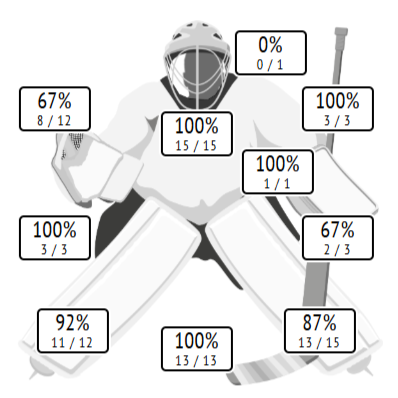
Goalie Szn Stats — George
Games Played: 2
Goals Against: 6
Average Goals Against per Game: 3
PK Goals Against: 1
Avg SPG: 15
Save Percentage: 83%
Scoring Area Saves: 7
Scoring Area Save Percentage: 68%
Brilliant Saves: 1.5
Forbes
Sarnia-Lambton Jr. Sting U15 AAA / Scouting Report
Overview
Sarnia plays a structured, defensive game. They don’t take many risks and rely on patience to force mistakes. Most of their pressure comes off turnovers and counterattacks through the middle.
Offense
Most shots come from the perimeter or point — low-danger volume team.
Generate offense through rebounds and net-front scrambles rather than clean setups.
Top line drives the bulk of their scoring; depth players mostly chip pucks deep and chase.
Heavy on point shots — defensemen look for tips and chaos in front.
Weak sustained offensive zone time; cycles break down quickly under pressure.
When they score, it’s usually because opponents get caught flat-footed in transition.
Shooting heatmap shows their most dangerous area is the right-side mid-slot.
Average 2–3 goals per game, with limited secondary scoring..
Keys to Beating Them
Get pucks and bodies to the net.
Own the slot — most of their goals against come from there.
Force turnovers with early pressure.
Extend offensive zone time; their D breaks down under pressure.
Stay disciplined — they rely on power plays for offense.
Faceoffs
Around 50% overall, but weaker in both offensive and defensive zones (~45%).
Centers lean in early, often lose clean draws on tie-ups.
Pressure off the draw works — wingers slow to react defensively.
They prefer to win pucks back and reset through their defensemen.
Defense
Very compact, they collapse hard around the net and block a lot of initial shots.
Struggle to track backside movement and cross-ice seams.
Poor gap control in transition; D can be exposed by speed through the neutral zone.
Slow puck retrievals, they often rim pucks up the boards under pressure.
Coverage breaks down when forced into extended D-zone time.
Opponents have success when keeping pucks low-to-high and attacking the slot from rotations..
Transition Game
Conservative breakout system: D-to-D, then up the wall, predictable and easy to read.
Forwards cheat for stretch passes, leaving gaps between layers.
Turnovers common if forechecked aggressively with speed.
Rarely hit the middle lane cleanly, most exits are chipped out.
Counterattack looks are direct but one-dimensional.
Goaltending
Starting goalie: strong glove, weak blocker (low save % on shots to that side).
Rebound control inconsistent — pucks drop in front.
Backup drops early and gets beaten five-hole and low blocker side.
Both goalies sit deep in the crease; screens and tips cause issues.
Goalie heatmap confirms high save % up high, weaker low and lateral.
Keys to Beating Them
Play with pace — they struggle to handle quick transitions.
Force turnovers by forechecking aggressively on their D.
Drive through the middle and attack the slot; that’s where breakdowns happen.
Shoot blocker side and follow rebounds — both goalies give up second chances.
Keep possession low and rotate high; their coverage loses shape on movement.
Limit turnovers in the neutral zone — they feed on counter rushes.
Stay disciplined and patient; they’ll wait for mistakes.
George